

Drug alcohol testing at work UK is no longer a niche concern reserved for safety-critical industries. It has become a core part of how responsible employers protect their people, their…
Drug alcohol testing at work UK is no longer a niche concern reserved for safety-critical industries. It has become a core part of how responsible employers protect their people, their productivity, and their legal standing. Whether you run a construction site, a logistics fleet, a warehouse, or an office, the reality is the same: impairment at work carries real consequences, from accidents and absenteeism to reputational damage and costly tribunal claims.
The reason it matters comes down to duty of care. Under the Health and Safety at Work Act 1974, employers have a legal obligation to provide a safe working environment, and knowingly allowing an impaired employee to carry out their role can constitute a breach of that duty. Testing, when introduced fairly and transparently, gives businesses a clear, evidence-based way to identify risk, support employees who may be struggling, and demonstrate compliance. Done well, it protects everyone - not just the bottom line.
What Is drug alcohol testing at work UK?
Drug and alcohol testing at work in the UK is the process by which employers screen staff for the presence of illegal substances, prescription drug misuse, or alcohol in the body. It's typically carried out through urine, saliva, breath, hair, or blood samples, and is used to safeguard workplace safety, productivity, and legal compliance.
There's no single piece of legislation that governs testing outright. Instead, employers operate within a framework shaped by the Health and Safety at Work Act 1974, the Misuse of Drugs Act 1971, the Transport and Works Act 1992, the Human Rights Act 1998, and UK GDPR. Consent is central. In most cases, employees must agree to testing, usually through a clause in their contract or a clearly communicated workplace policy.
The scope of testing varies widely. Some organisations only conduct pre-employment screening, while others run random tests, for-cause testing after an incident, or routine monitoring for those in safety-critical roles. Sectors like construction, transport, aviation, rail, oil and gas, and healthcare tend to have the strictest programmes, often because a lapse in judgement could put lives at risk.
Context matters, too. Testing isn't simply about catching people out. Responsible employers pair it with support, offering rehabilitation, occupational health referrals, and clear procedures for staff who disclose a problem. Handled well, it protects colleagues, customers, and the business itself, while treating employees fairly and with dignity throughout what can be a sensitive and personal process.
Key Benefits of drug alcohol testing at work UK
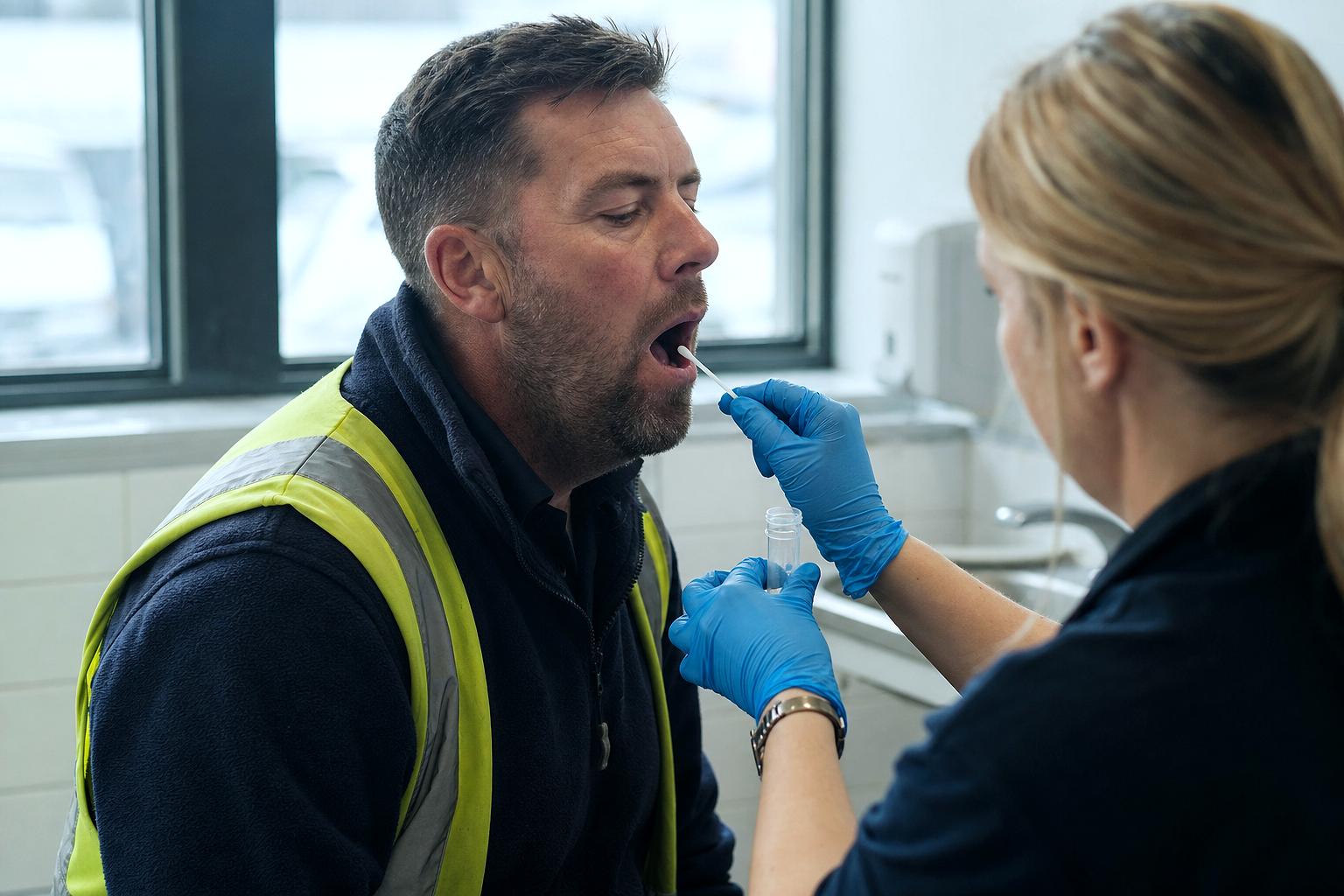
Implementing drug alcohol testing at work UK delivers measurable value across safety, productivity, and legal compliance. For employers navigating increasingly complex workplace risks, a structured testing programme is one of the most effective safeguards available.
A safer working environment
Impairment is a leading contributor to workplace accidents. In safety-critical sectors such as construction, transport, logistics and manufacturing, a single lapse in judgement can be catastrophic. Regular testing acts as both a deterrent and an early warning system, helping identify issues before they cause harm to workers, colleagues or the public. This directly supports your duty of care under the Health and Safety at Work Act 1974.
Improved productivity and attendance
Substance misuse costs UK businesses billions each year through absenteeism, reduced performance and staff turnover. Employees affected by drugs or alcohol are more likely to arrive late, take unplanned leave, or underperform. A clear testing policy encourages accountability, and often prompts employees to seek help earlier - reducing long-term disruption to teams and projects.
Legal protection and regulatory compliance
For regulated industries, testing isn't optional. Rail, aviation, maritime and certain HGV operations must meet strict statutory requirements. Even outside these sectors, demonstrable testing procedures help employers defend against negligence claims and show due diligence should an incident occur.
Supporting employee wellbeing
Testing shouldn't be viewed purely as enforcement. When paired with a supportive policy and access to occupational health services, it becomes a mechanism for identifying employees who need help - not simply punishing them. Many workers struggling with dependency welcome the intervention that testing can trigger.
Stronger workplace culture
A transparent, fairly applied testing programme reinforces expectations around professionalism and mutual respect. Staff feel confident their colleagues are fit for work, which builds trust, morale and engagement across the organisation - ultimately protecting your reputation with clients and partners alike.
How drug alcohol testing at work UK Works
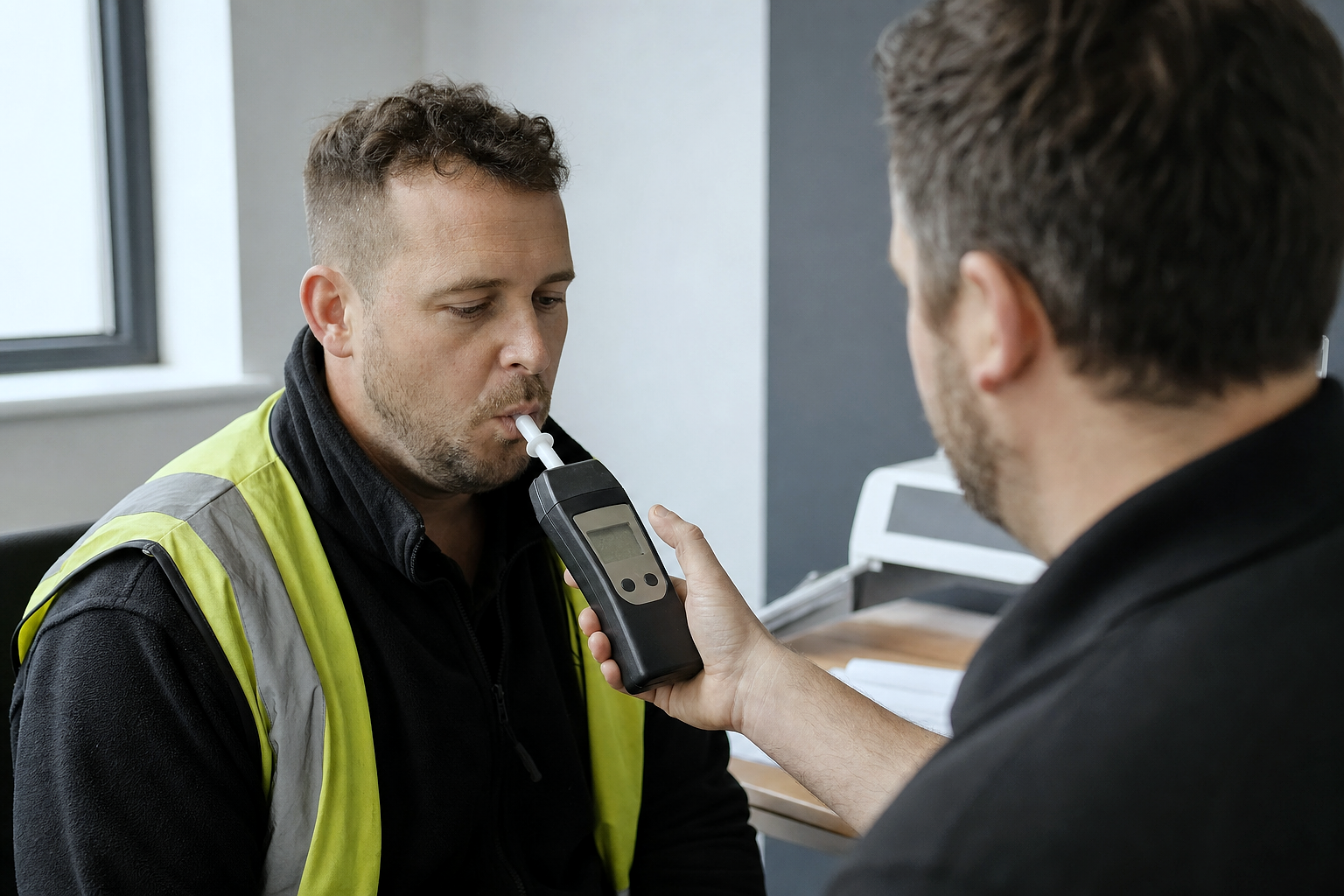
Workplace drug and alcohol testing in the UK follows a structured process designed to protect both employee rights and business interests. Understanding each stage helps employers stay compliant and reassures staff that the procedure is fair, confidential, and legally sound.
1. Policy and Consent
Before any testing takes place, employers must have a clear, written drug and alcohol policy embedded in the employment contract or staff handbook. Employees need to give informed consent, and the policy should outline when testing occurs, what substances are screened, and the consequences of a positive result.
2. Selecting the Type of Test
Testing typically falls into several categories: pre-employment, random, for-cause (following incidents or suspicion), post-incident, and return-to-work. The type chosen depends on the role, industry regulations, and safety-critical duties involved.
3. Sample Collection
Trained collection officers gather samples on-site or at an accredited clinic. The most common methods include:
- Urine testing - widely used for detecting recent drug use
- Oral fluid (saliva) testing - ideal for identifying current impairment
- Breath testing - standard for alcohol screening
- Hair testing - provides a historical picture, often up to 90 days
Strict chain-of-custody procedures are followed to prevent tampering or contamination.
4. Laboratory Analysis
Samples are sent to a UKAS-accredited laboratory where initial screening is carried out. Any non-negative results undergo confirmatory testing using gas chromatography-mass spectrometry (GC-MS), which delivers highly accurate results.
5. Medical Review
A qualified Medical Review Officer (MRO) reviews confirmed positives, contacting the individual to check for legitimate explanations such as prescribed medication before releasing the final result to the employer.
6. Reporting and Action
Results are communicated confidentially. Employers then follow their policy, which may involve support through occupational health, disciplinary action, or rehabilitation pathways - balancing accountability with duty of care.
Common Questions About drug alcohol testing at work UK
Is drug and alcohol testing at work legal in the UK? Yes, but with conditions. Employers must have a clear written policy, obtain informed consent, and ensure testing is proportionate to the role. Safety-critical industries such as transport, construction, and energy have stronger justification for routine testing.
Can I refuse a workplace drug or alcohol test? You can, but refusal often carries consequences. If your contract or company policy states that testing is a condition of employment, refusing may be treated as gross misconduct and could lead to disciplinary action or dismissal.
What substances are typically screened for? Standard panels usually detect cannabis, cocaine, opiates, amphetamines, methamphetamines, and benzodiazepines. Alcohol testing is commonly done via breathalyser, though saliva and blood testing are also used.
Can prescription medication show up on a test? Yes. Codeine, certain painkillers, and medications for ADHD or anxiety can trigger positive results. Always disclose prescribed medication to the testing officer or Medical Review Officer beforehand to avoid misinterpretation.
How accurate are workplace drug tests? Initial screening tests are highly sensitive but can produce false positives. Any non-negative result should be confirmed through laboratory analysis, typically using GC-MS or LC-MS methods, which are considered the gold standard.
Who sees the results? Results are confidential and shared only with authorised personnel, usually HR and your line manager. Under UK GDPR, health data must be handled securely and retained only as long as necessary.
What happens after a positive result? Outcomes vary. Some employers offer rehabilitation support and a return-to-work agreement, while others follow strict disciplinary procedures depending on the role and policy.
Conclusion
Drug and alcohol testing at work in the UK sits at the intersection of employment law, health and safety duties, and employee welfare. Get it right, and you create a safer workplace, protect your people, and reduce costly incidents. Get it wrong, and you risk legal challenge, damaged trust, and grievances that drag on for months.
The essentials are straightforward. You need a clear, written policy. You need employee consent, ideally built into contracts. Testing must be proportionate, fair, and consistently applied. And when a test returns a positive result, treat it as a moment for support as much as scrutiny - addiction is a health issue, not simply a disciplinary matter.
Your next step? Review your current policy against the standards outlined above. If you don't have one, or it hasn't been updated in the last two years, speak to an employment law specialist or an accredited testing provider before you introduce any programme.
Learn more about Employment Law for Employers.